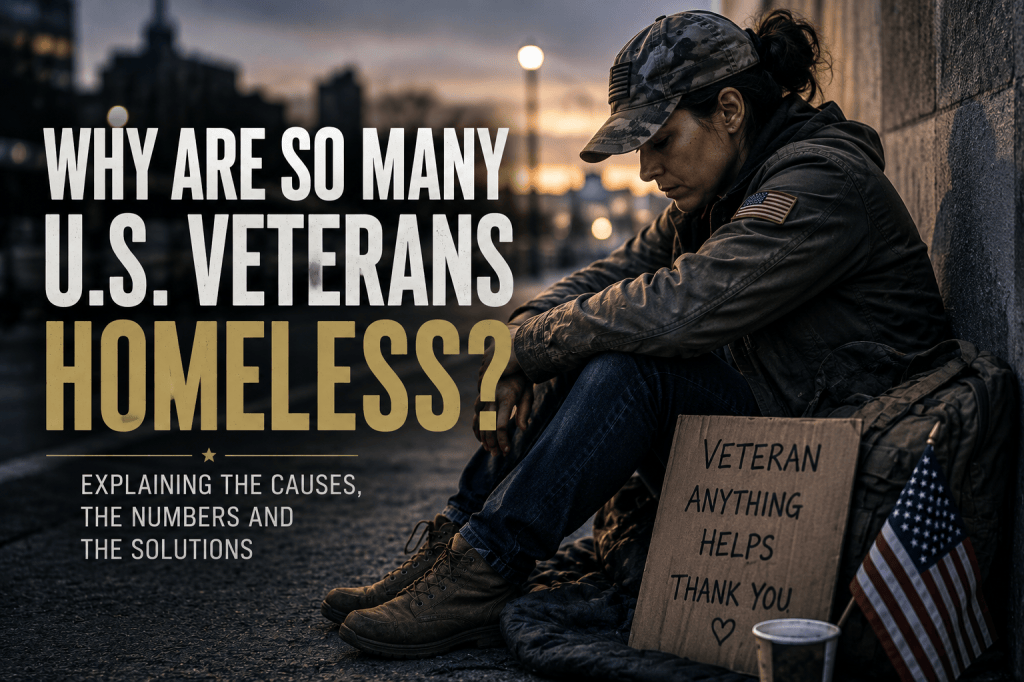
A homeless female veteran sitting on the street asking for help generated by artificial intelligence. Credit: ChatGPT via Emersyn Quinn Rose.
Veterans took an oath to protect the United States of America while they served on active duty, now thousands of men and women who served honorably are sleeping in their cars, in shelters, or on sidewalks across every city in America. While there are numerous government assistance programs to end veteran homelessness, the programs are hard to apply to and get accepted into.
Although less than 1% of Americans have served in the U.S. military, nearly 6% of homeless Americans are U.S. veterans. Veteran homelessness is a complex issue that involves mental health issues, physical health issues, finding affordable housing, and having difficulties transitioning back into the civilian life. Even though homelessness amongst veterans has declined by roughly 8% in the last two years, an estimated 32,882 veterans are experiencing homelessness on a single night. Understanding why veterans are homeless and what programs exist to help them will shed light on both the progress and the challenges the U.S. government faces while trying to help homeless veterans.

Why are veterans homeless?
In the land of the free and home of the brave, why are so many of America’s brave facing homelessness? Veterans face some of the same issues as their civilian counterparts like the lack of affordable housing, lack of economic opportunities, and cultural issues. Veterans also face a slew of issues that stem from their military service. One of the most notable challenges veterans face are mental health issues, like post traumatic stress disorder. PTSD can lead to substance use disorders, issues maintaining suitable employment, and can even lead to incarceration. Physical heath issues like traumatic brain injuries, back injuries, and knee issues also make it difficult for veterans to find suitable employment that won’t further aggravate their disabilities.
How widespread is the problem?
Although the number of homeless veterans has dropped drastically since 2010, anywhere from 32,000-35,000 veterans face homelessness on any given day in the United States. Veterans of all walks of life face homelessness; however, African Americans and Native Americans face homelessness at a disproportionate rate. Female veterans are four times more likely to face homelessness than their female civilian counterparts. If a female veteran has suffered from military sexual trauma (MST) she is at an even higher risk of homelessness. Male veterans make up 20% of all homeless men in the United States and make up 90% of homeless veterans.
What is being done to help?
Homelessness amongst U.S. veterans is prevalent; however, there are a lot of programs at both the state and federal level that try to help homeless veterans. The Department of Veterans Affairs (VA) has both a hotline for homeless veterans and a veteran crisis line (988 press 1) veterans can call to talk to trained counselors about homelessness and the mental health issues they are facing. The VA and every U.S. state offers homeless veterans employment services to help struggling veterans gain suitable employment. Veterans that are trying to keep their homes and veterans trying to find safe housing can contact the U.S. Department of Housing and Urban Development and the VA Supportive Housing Program (HUD-VASH) to get help paying their mortgage or rent until they are back on their feet.
Conclusion
There are a wide variety of reasons for veteran homelessness and none of them are shameful. There are a lot of programs that can help veterans and their families if they are struggling. The best course of action a veteran can take is reaching out to their care team at the VA so that they can provide resources to programs to find safe and suitable housing. If visiting a VA is not possible, call the National Call Center for Homeless Veterans at 877-424-3838. The programs take time and persistence to get into so don’t give up. If you know a struggling veteran, supporting them emotionally can help them feel connected which can lead them to ask for the support they need at the VA.


Leave a comment