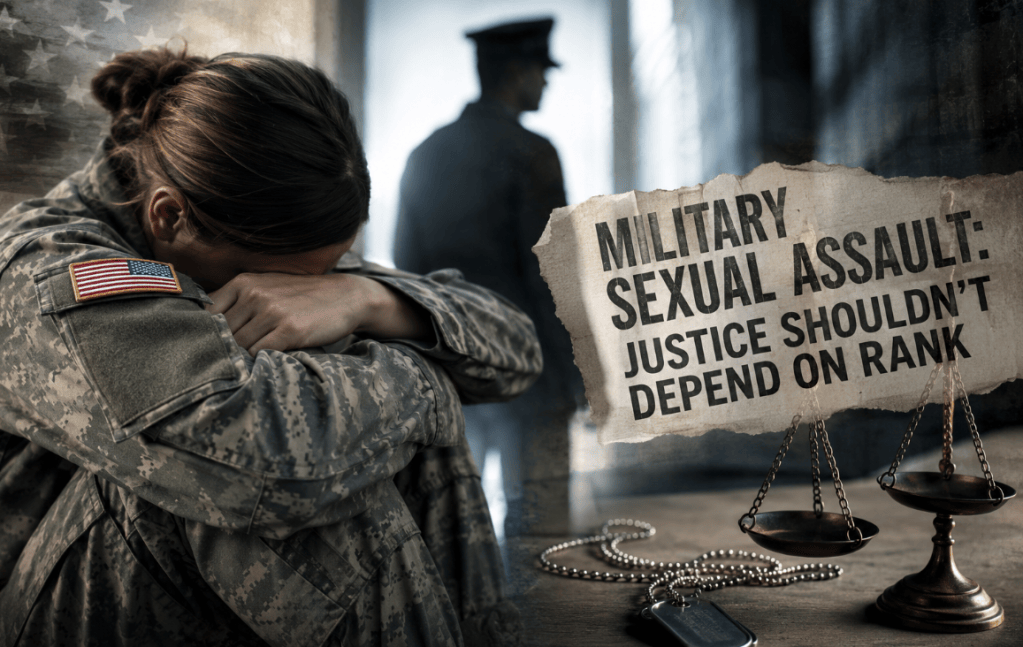
Every service member swears an oath to defend our nation, but who is protecting thousands of soldiers that report being sexually assaulted by their fellow service members annually? After surviving the assault, many service members state the hardest part of healing is trying to trust the same institution that assaulted them with investigating the crime.
Although recent reforms have improved the military justice system, military sexual assault (MST) investigations should be conducted by non-military law enforcement rather than military personnel. President Biden’s executive orders removed a soldiers immediate chain of command from investigating MST yet other military members will still be conducting the investigations. This raises concerns on whether their cases will be handled impartially and without the fear of retaliation.
Military Sexual Trauma Stats
According to the Department of Defense’s 2024 Annual Report on Sexual Assault, there were 8,195 reports of sexual assaults involving U.S. military members. The report states that the actual number of sexual assault is likely much higher due to soldiers never reporting the crime. The fear of retaliation and the lack in confidence soldiers have in the military justice system are two of the main reasons for unreported assaults. One report states that only four percent of MST cases result in convictions.
Historical Context for MST
One of the most televised MST scandals was the 2020 disappearance and murder of Spc. Vanessa Guillen at Fort Cavazos (formerly Fort Hood). Vanessa’s family told investigators she was sexually harassed by a fellow service member. The Fort Hood Independent Review Committee found widespread leadership failures and serious deficiencies when it came to reporting and the handling of sexual harassment and sexual assault.
Retired USAF Col. Don Christensen
Experts argue that soldiers are more likely to report sexual assaults if they do not fear retaliation and if they believe their case will be investigated impartially. Former U.S. Air Force chief prosecutor and current president of Protect Our Defenders, retired USAF Col. Don Christensen, argues that independent investigations help eliminate conflicts of interest and boosts confidence in the justice system.
Counterargument
Supporters of the current system argue that military investigators understand the culture, structure, and the demands of the military. They state that recent reforms like the Offices of Special Trial Counsel address the main concerns and issues surrounding MST investigations since it removes the soldiers chain of command from the decision process.
The creation of the Offices of Special Trail Counsel created meaningful progress, but it did not fully eliminate the concerns about impartiality. The military is a relatively small community where investigators, commanders, and service members tend to cross paths through out their service . Civilian investigators would be more impartial and would evaluate cases on evidence, not rank or title.
Conclusion
Every MST survivor deserves to have their case investigated fairly and without bias. Investigations should look at facts not rank, relationships, or how it will make a chain of command look. Assigning civilian law enforcement to investigate military sexual assault claims will strengthen accountability, bring trust back to the military justice system, and encourage more MST survivors to come forward. Soldiers protect the U.S. daily; it’s time to protect them during military sexual trauma investigations.


Leave a comment